March 2026 · Industrial Procurement Guide
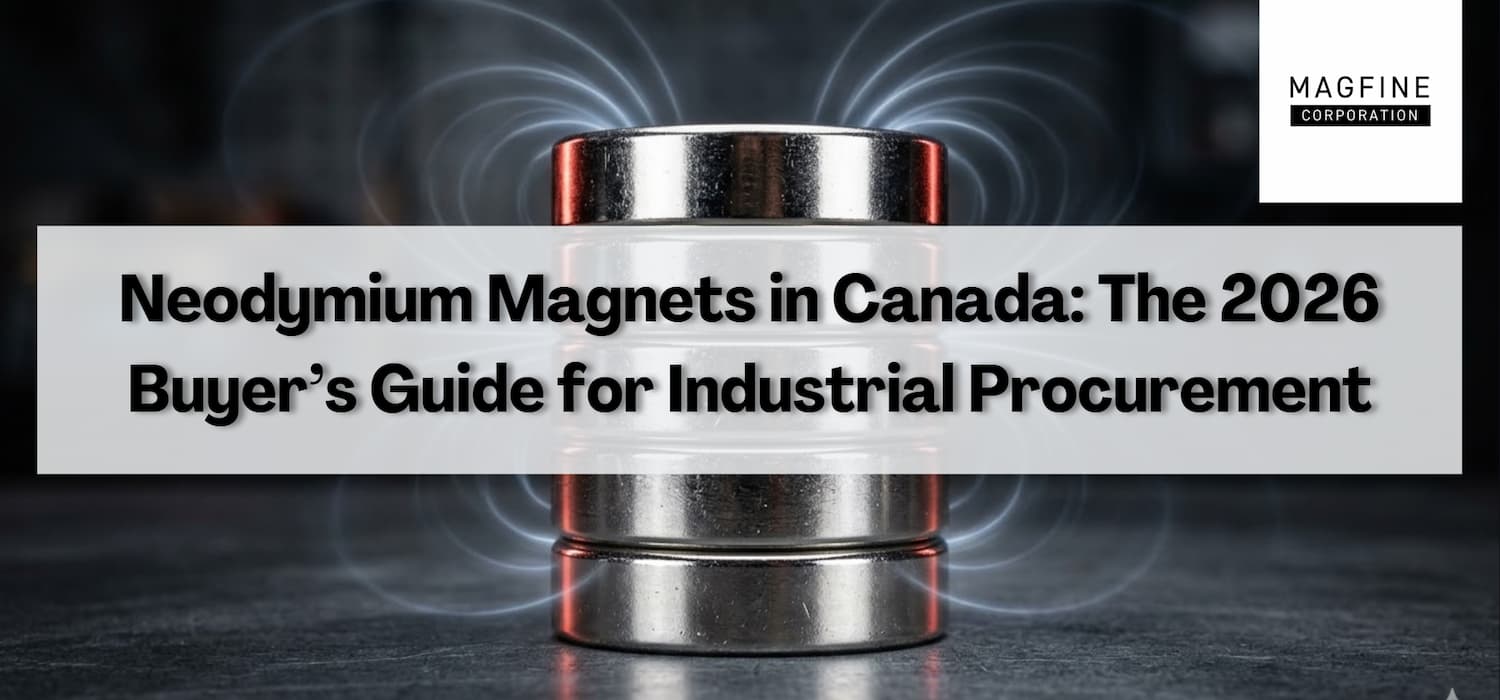
Canadian industrial buyers are navigating a tighter NdFeB magnet market than at any point in the past decade. This guide covers what changed, what it means for your procurement, and how to specify and source the right magnets for your operation.
Published March 9, 2026 · 12 min read · Written for Canadian OEMs, Engineers and Procurement Teams
Key Takeaways
- China's April 2025 rare earth export controls are still active and affecting lead times for overseas orders.
- Neodymium oxide is trading above US $112,000 per tonne, and prices are not expected to ease through the rest of 2026.
- Grades N42 through N52 are suitable for the large majority of Canadian industrial and automation applications.
- Magfine carries Canadian inventory with RoHS/REACH compliance and a proprietary high-durability epoxy coating.
- EV production, robotics, and wind energy are driving sustained demand growth, making early procurement planning worthwhile.
Neodymium Magnets: Small Components With Outsized Supply Risk
Neodymium-iron-boron (NdFeB) magnets pack more magnetic energy per unit volume than any other permanent magnet type on the market. A standard N52 disc roughly the size of a large coin produces a field exceeding 1.4 Tesla, which is about 30,000 times the strength of the Earth's magnetic field. That performance profile is why NdFeB has become the default choice across a wide span of industries, from servo motors and voice coils in industrial automation to lifting assemblies and inline filtration equipment in food production.
Canadian buyers who treated these components as a simple commodity purchase are finding that approach increasingly expensive in 2026. The combination of concentrated global supply and a string of Chinese export policy changes has introduced a level of procurement risk that most magnet buyers had not previously factored into their planning cycles.
|
$9.2B Projected rare earth magnet market by 2036 |
90% Of global NdFeB production originating in China |
|
9.2% Annual market growth forecast, 2026 to 2035 |
1–3 kg NdFeB used per EV traction motor |
What Happened to the Supply Chain and Where Things Stand Now
On April 4, 2025, China's Ministry of Commerce (MOFCOM) introduced export licensing requirements covering seven medium and heavy rare earth elements. Dysprosium and terbium, both essential inputs for high-coercivity NdFeB grades, were among them. The announcement came two days after a sweeping US tariff decision, and the timing was not coincidental. Within weeks, factories across North America and Europe were filing licence applications, shipments stalled at Chinese ports, and spot prices for dysprosium and terbium spiked sharply in importing markets. In parts of Europe, buyers were paying up to six times the prevailing Chinese domestic rate.
A second round of controls followed in October 2025, this time with extraterritorial reach. Under those rules, magnets manufactured outside China using Chinese-sourced materials or process technology also fell under MOFCOM jurisdiction. The Xi-Trump trade summit in late October produced a partial agreement: the October controls were suspended until November 10, 2026. The April restrictions, however, were not part of that deal and remain active today.
For Canadian procurement teams, the practical takeaway is straightforward. The suspension gives some breathing room on the broader October measures, but it is a pause, not a resolution. Sourcing from a supplier with Canadian-held inventory removes this exposure entirely.
⚠ Procurement Advisory — March 2026
The suspended October controls expire November 10, 2026. Most trade analysts expect MOFCOM to revisit these measures at that point. Procurement teams with direct China supply lines should consider building buffer stock before that window closes. Working through a Canadian-stocked supplier like Magfine bypasses the licensing issue altogether, since inventory is already held domestically and ships without export documentation delays.
Choosing the Right Grade: A Reference for Canadian Procurement
Grade selection is where many procurement errors begin. Specifying too high a grade wastes budget; specifying too low creates field performance or temperature reliability issues that surface only after assembly. The grade number refers to maximum energy product (measured in MGOe), and the letter suffix tells you the thermal ceiling.
| Grade | Max Energy | Max Temp | Canadian Application | Cost |
|---|---|---|---|---|
| N35 | 33–36 MGOe | 80 °C | Sensors, signage, office automation | Low |
| N42 | 40–43 MGOe | 80 °C | Fixtures, clamping, lifting | Low–Mid |
| N45 | 43–46 MGOe | 80 °C | Robotics, automation, actuators | Mid |
| N52 | 50–53 MGOe | 80 °C | High-density motors, MRI components | Mid–High |
| N42H | 40–43 MGOe | 120 °C | Automotive, under-hood assemblies | Mid |
| N38SH | 36–39 MGOe | 150 °C | Wind turbine generators, industrial motors | High |
| N35EH | 33–36 MGOe | 200 °C | High-temp industrial, oil and gas | Premium |
The suffix after the grade number indicates coercivity class: H is rated to 120°C, SH to 150°C, UH to 180°C, and EH to 200°C. For most Canadian industrial settings, N42 or N45 hits the right balance of performance and cost. N52 makes sense when your design envelope is tight and you need maximum pull force in a constrained space. If the magnet will be anywhere near a heat source — inside a motor housing, under a vehicle hood, or adjacent to processing equipment — selecting the correct thermal suffix is not optional. A standard-grade magnet that overheats loses its magnetization permanently.
Not sure which grade fits your application?
Magfine's technical team works through specifications with Canadian engineering and procurement contacts at no charge. Bring your drawing or performance requirements and we'll sort it out.
Talk to the Technical TeamThe Magnet Formats Most in Demand Across Canadian Industry
Disc and Cylinder Magnets
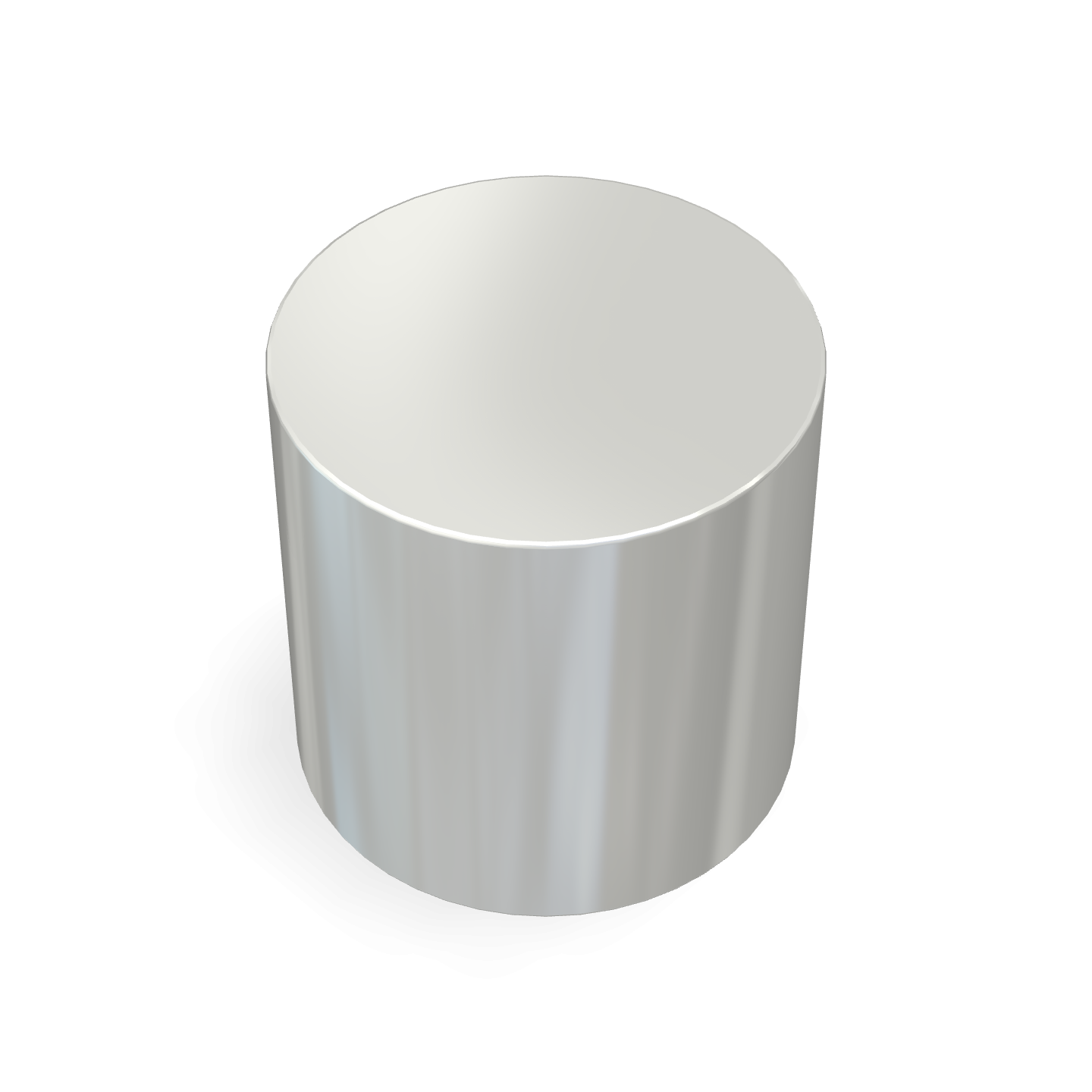
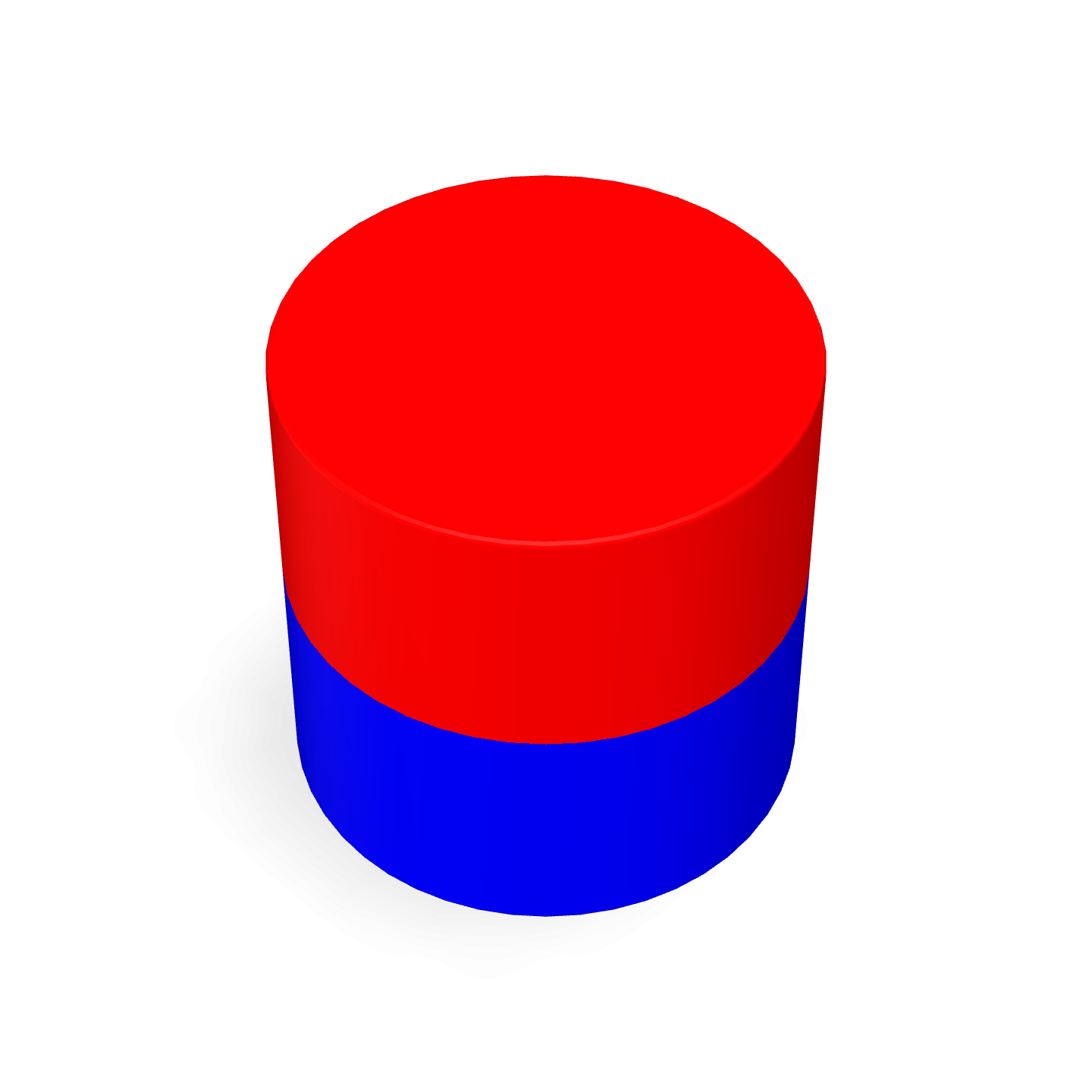
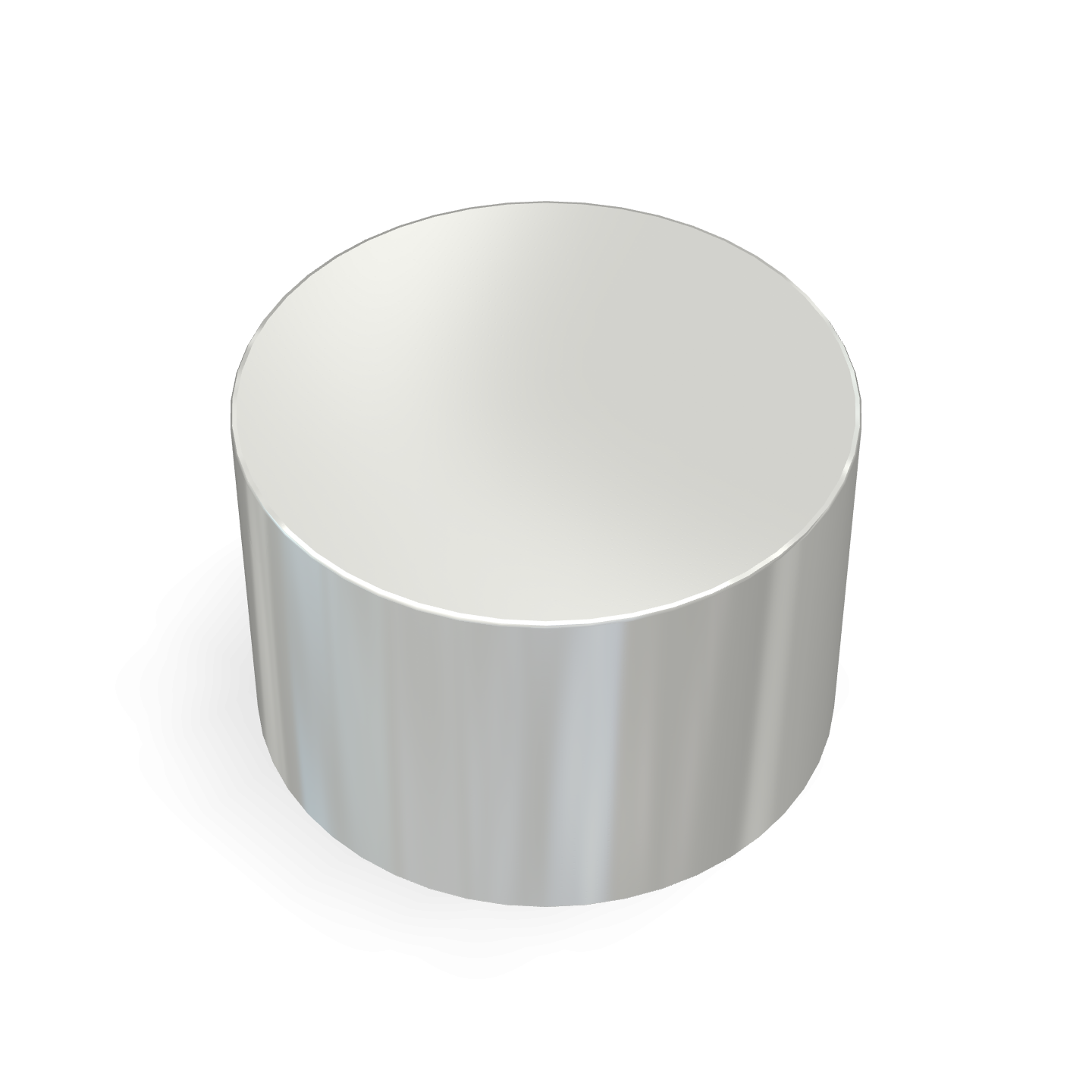
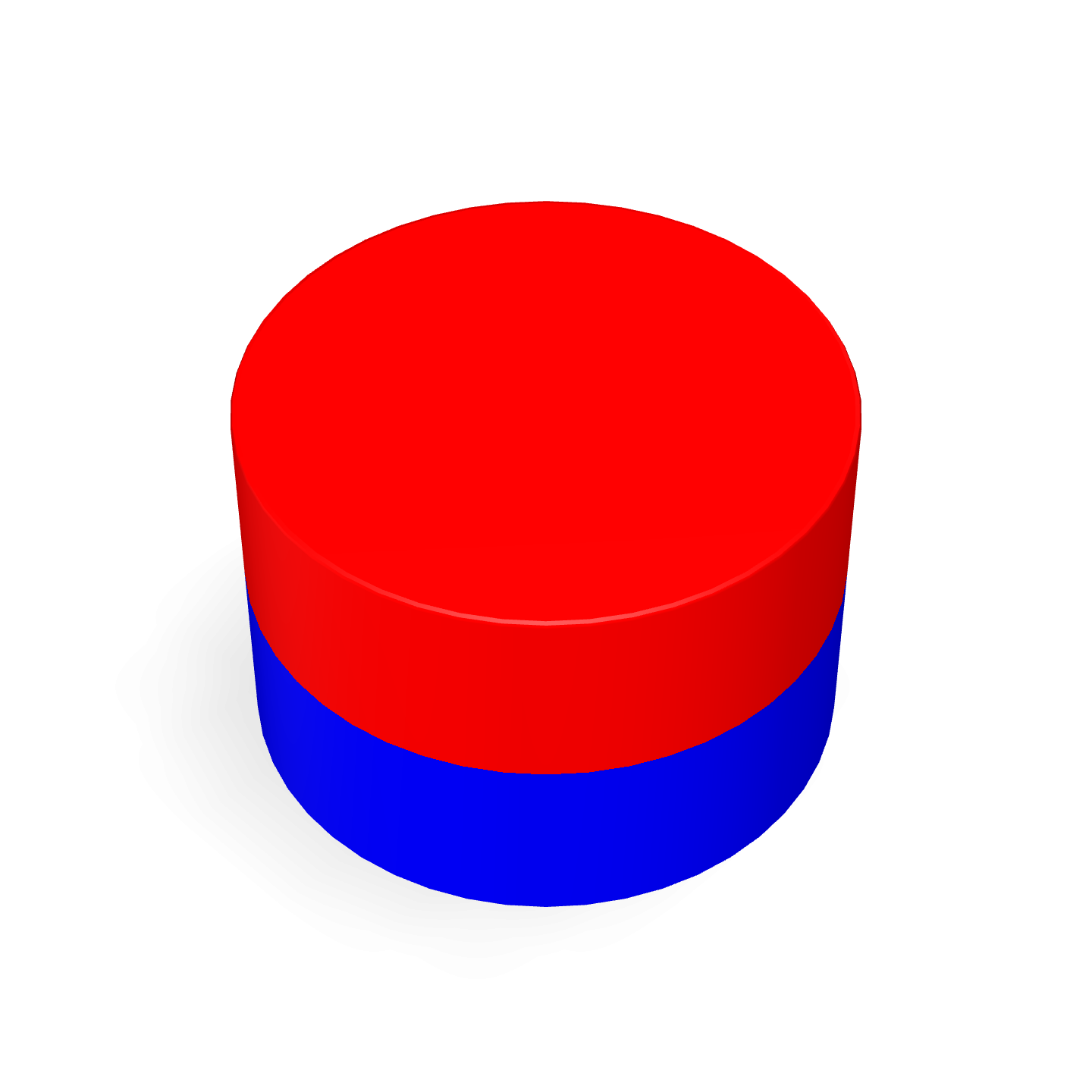
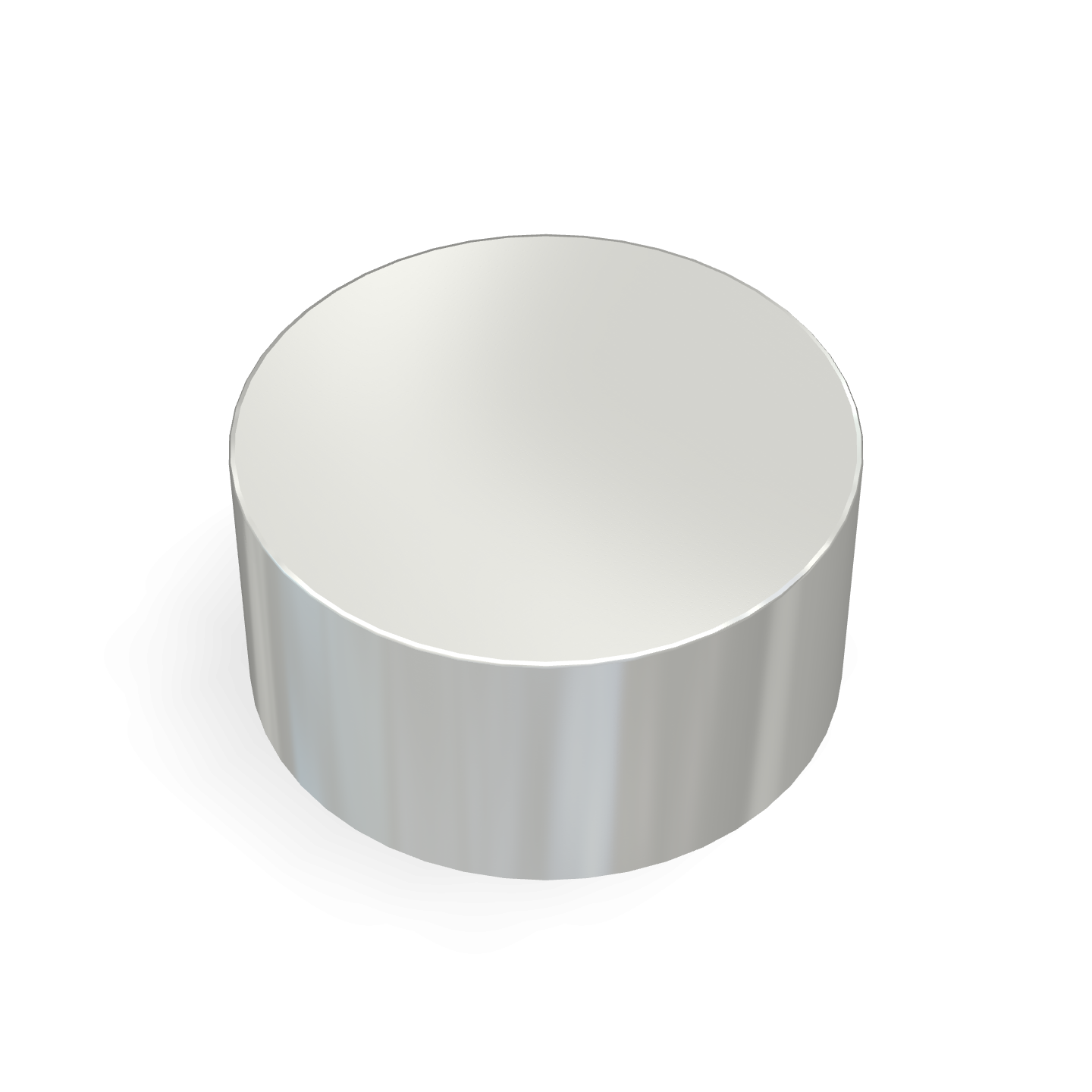
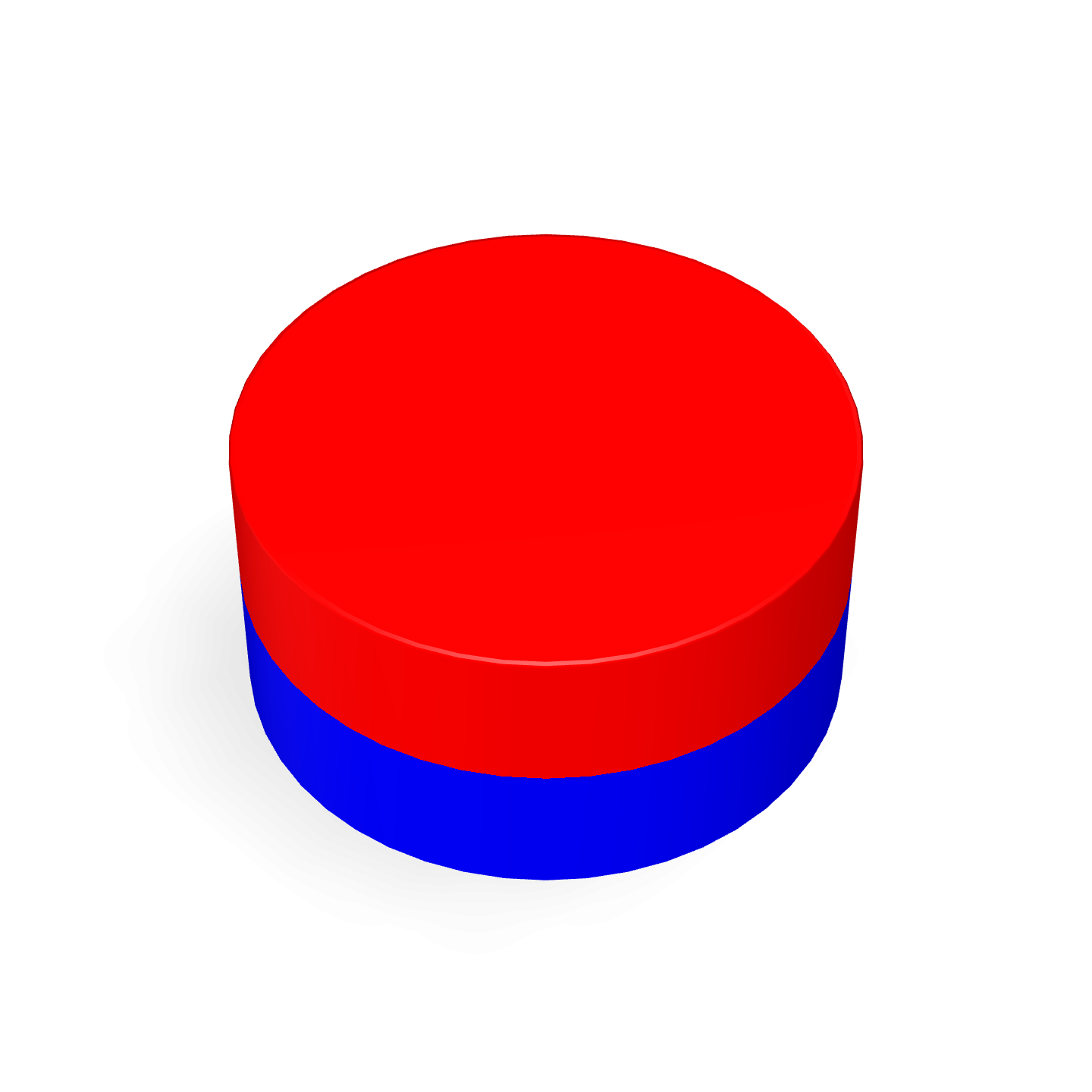
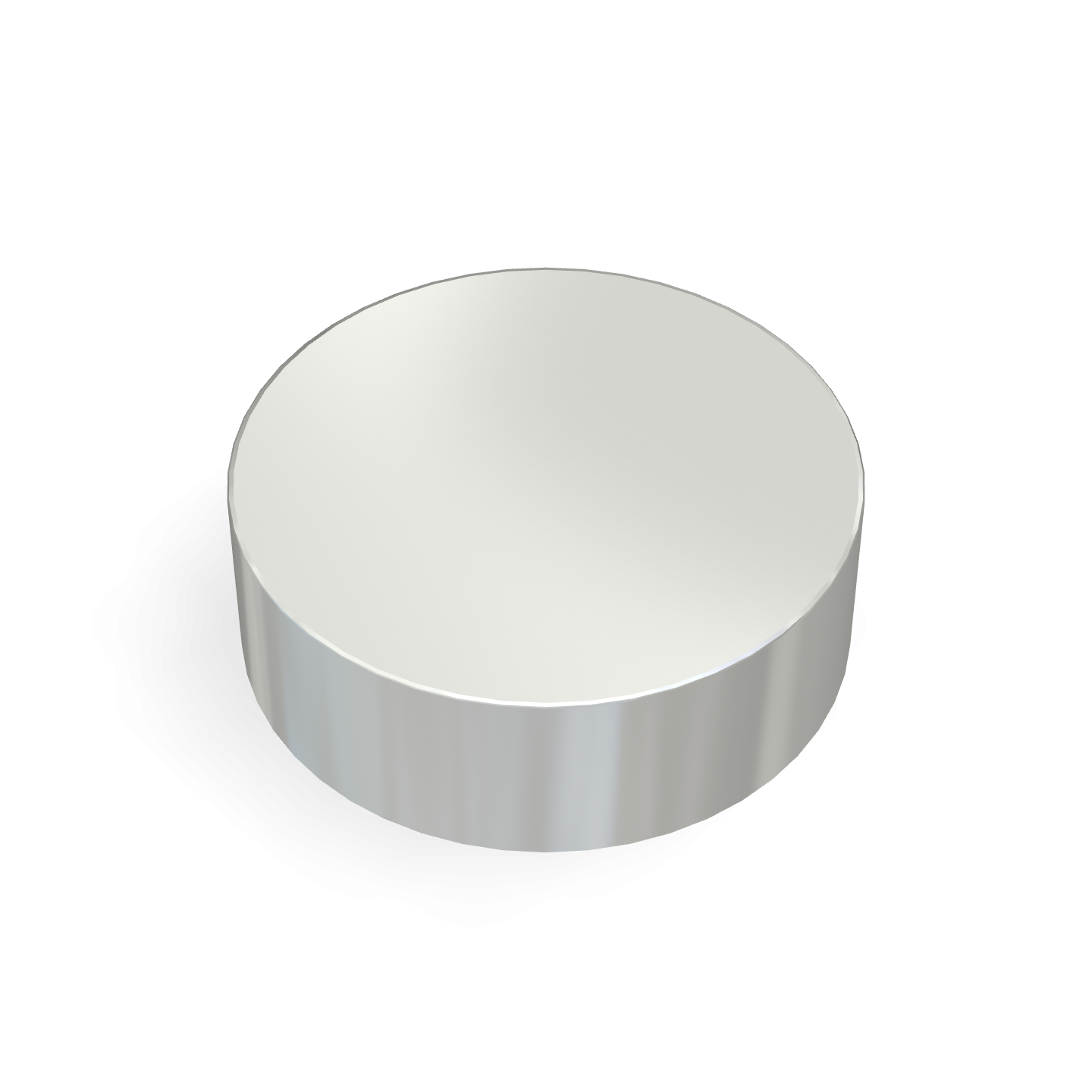
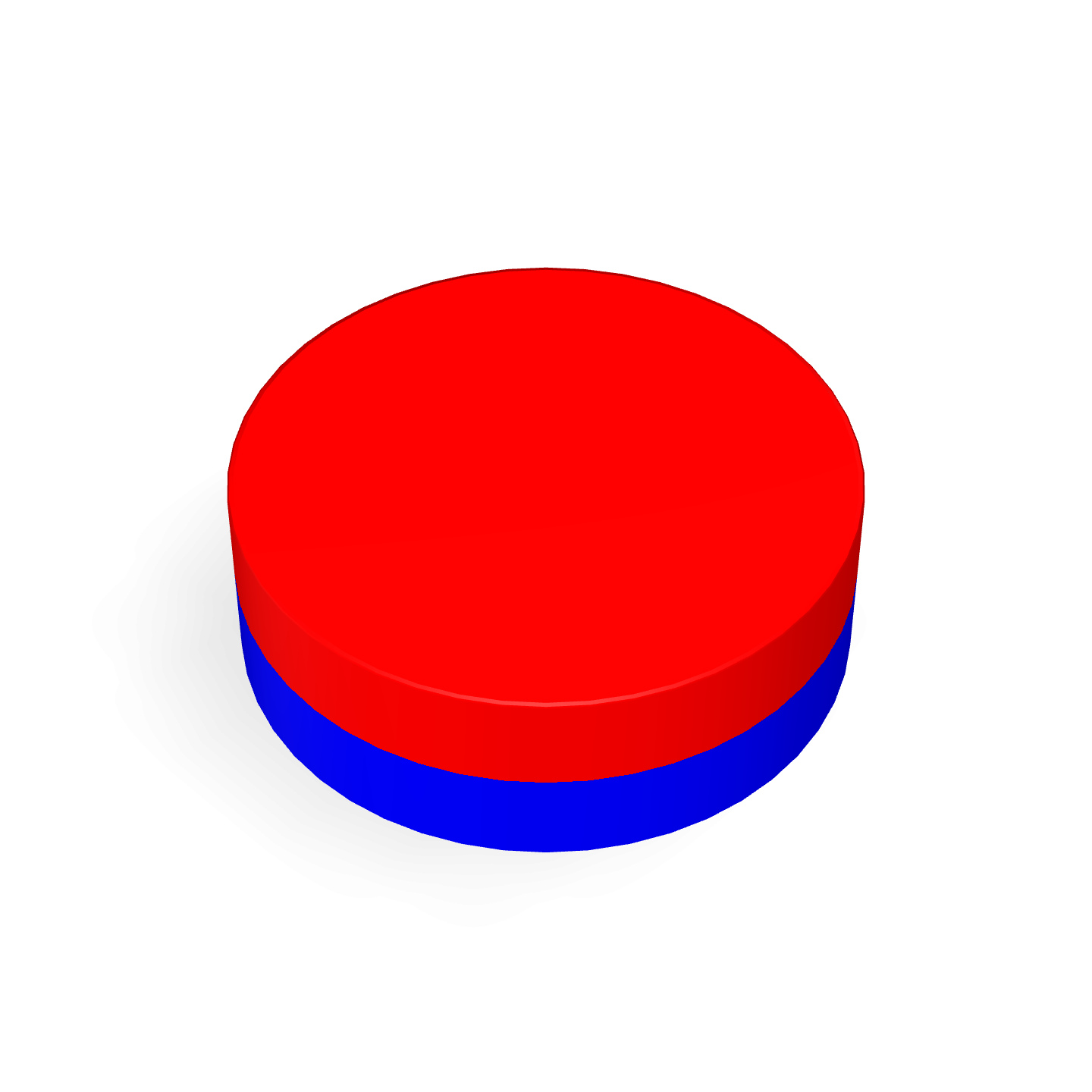
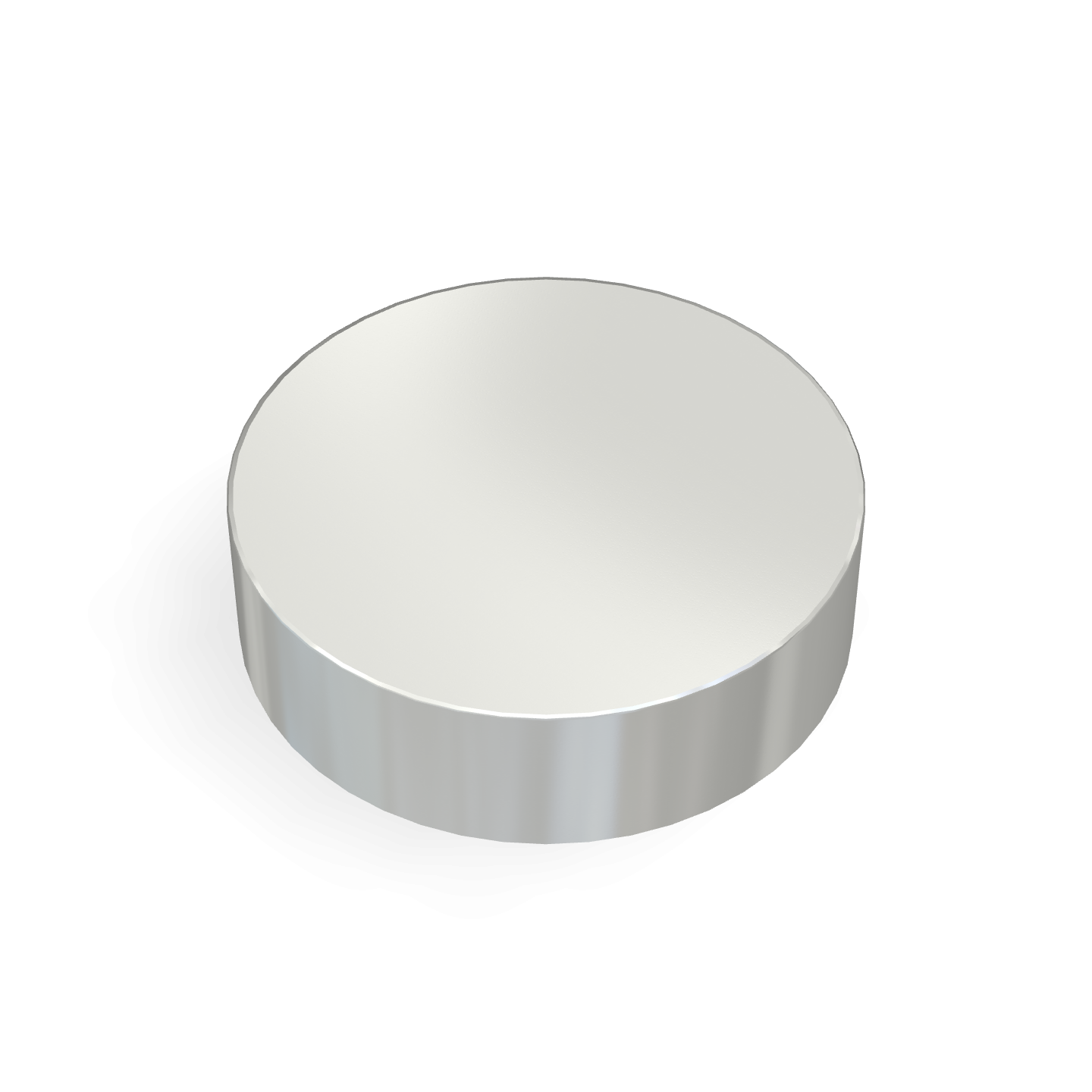
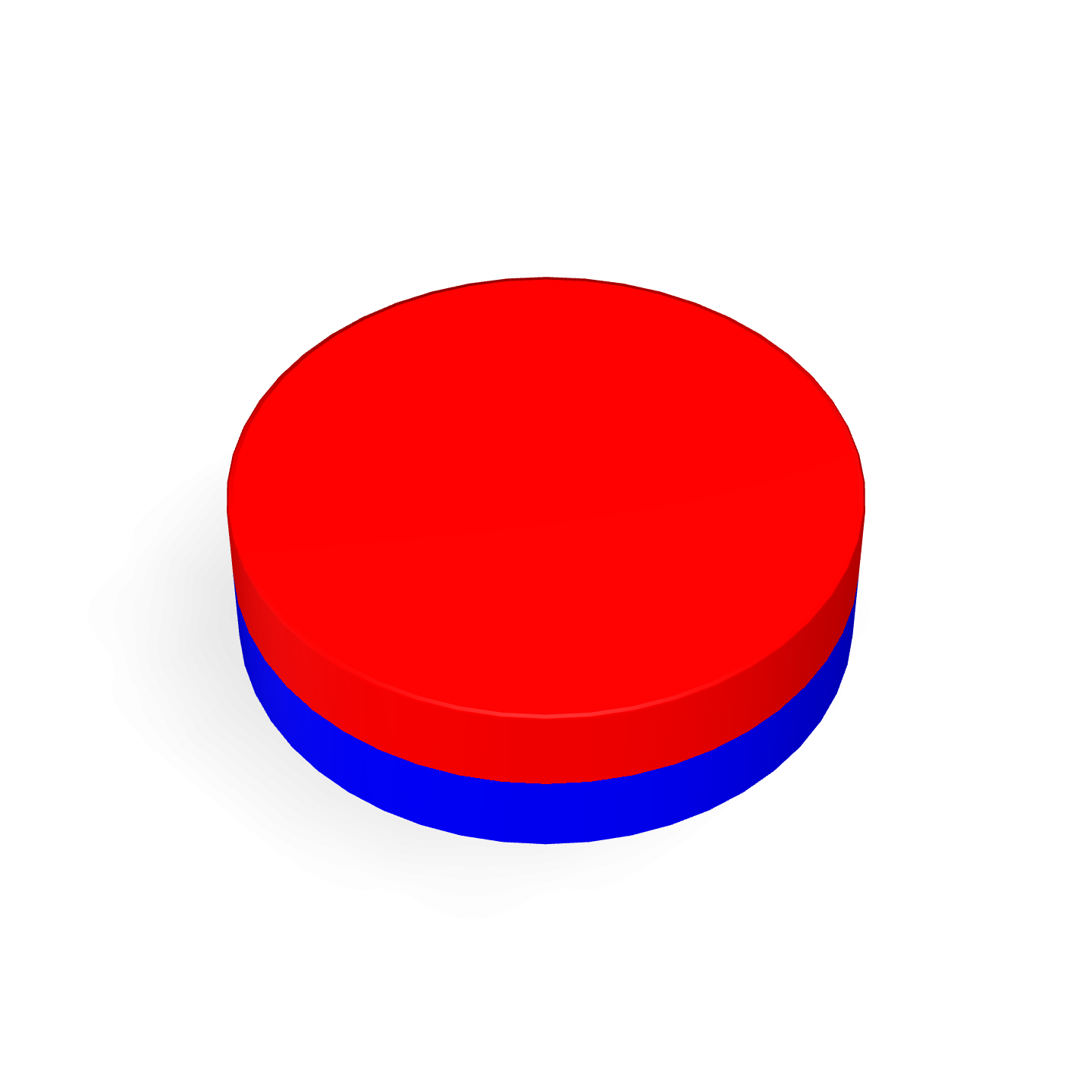
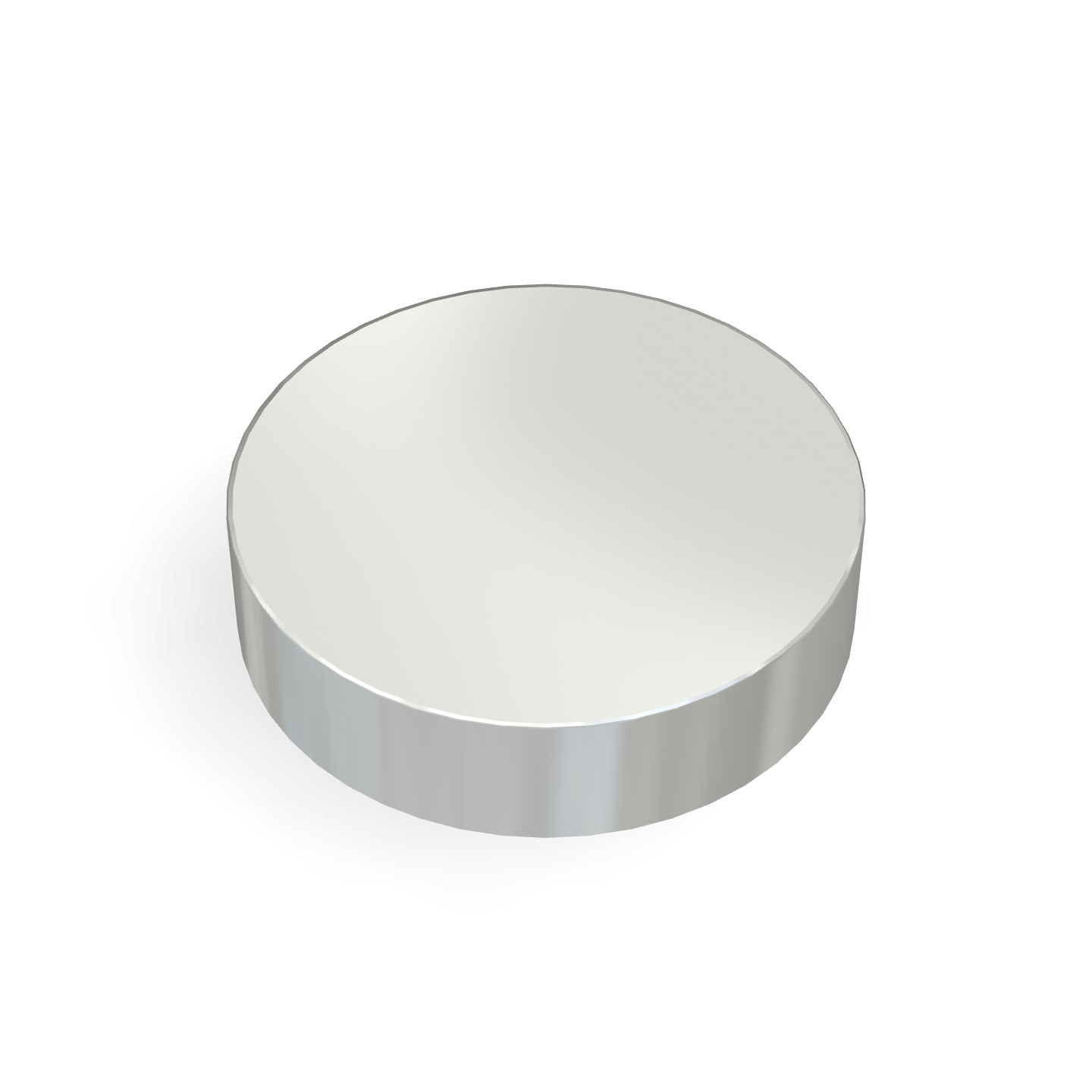
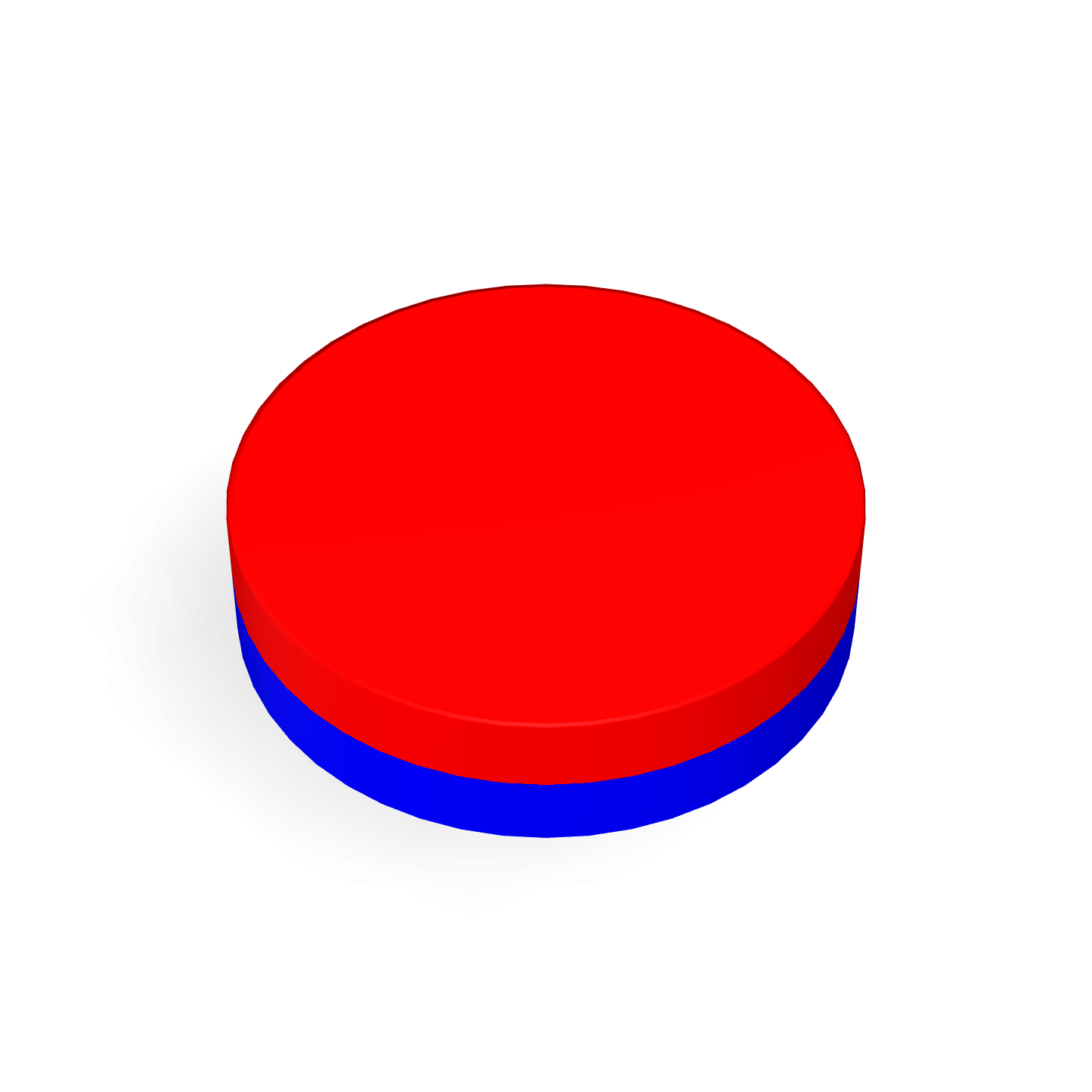
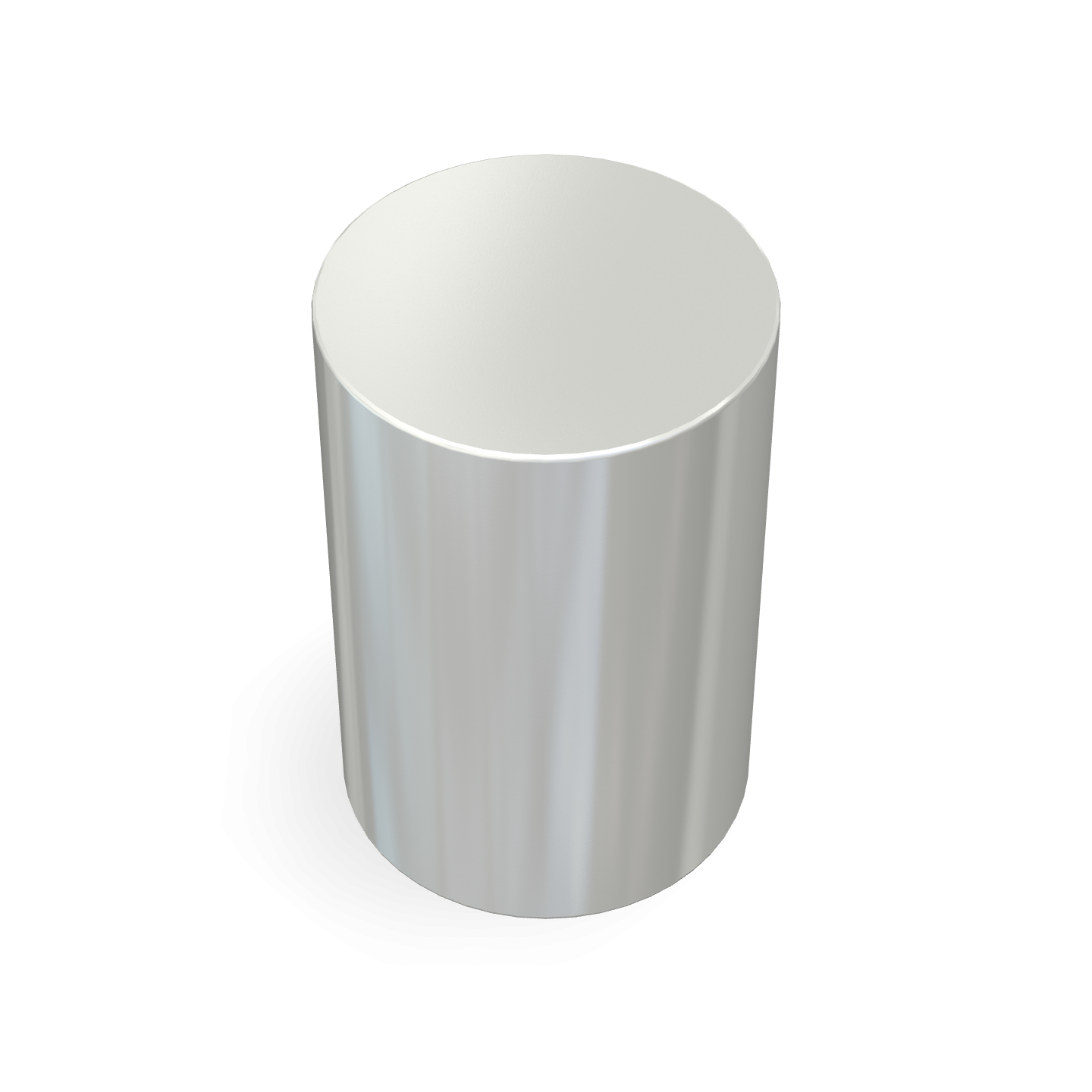
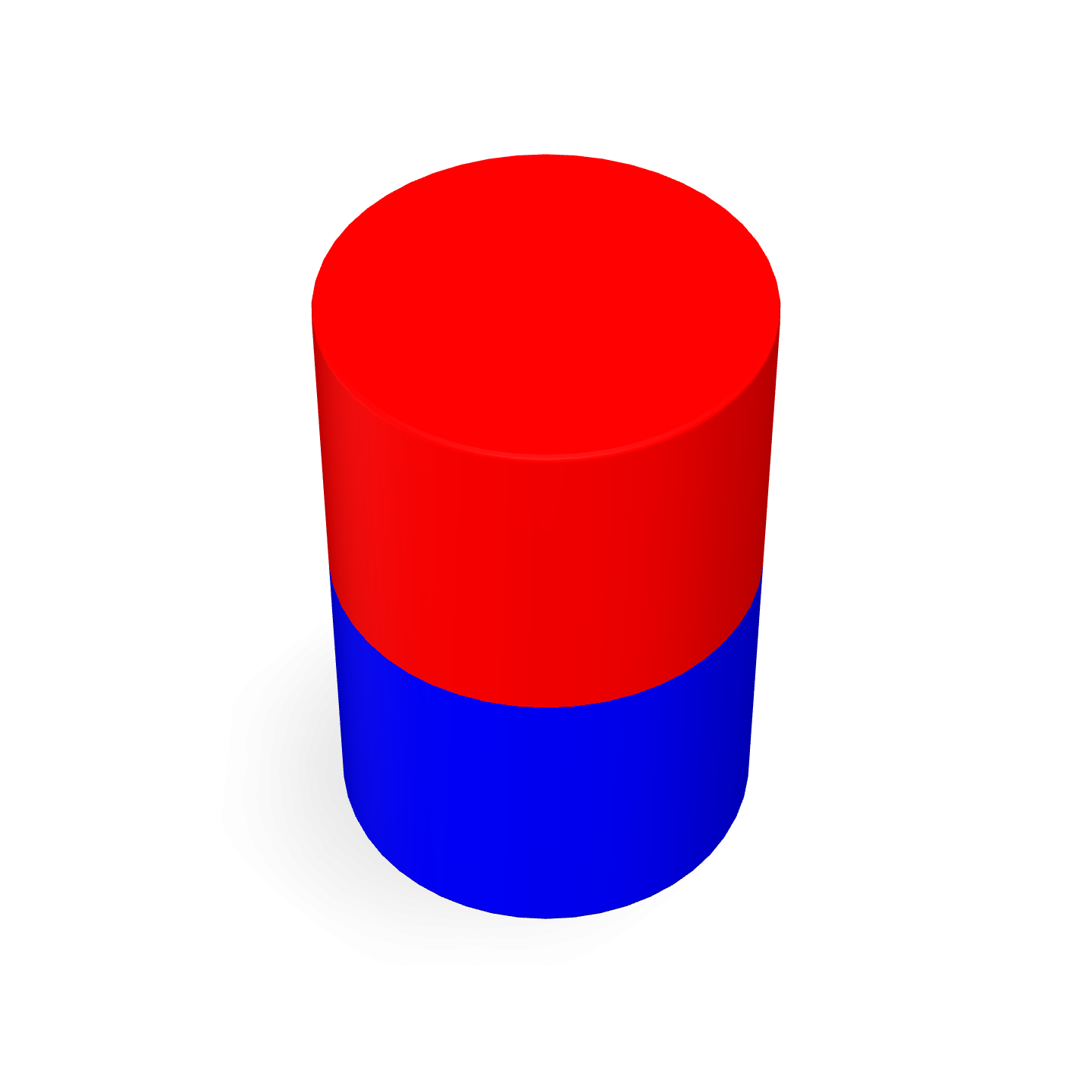
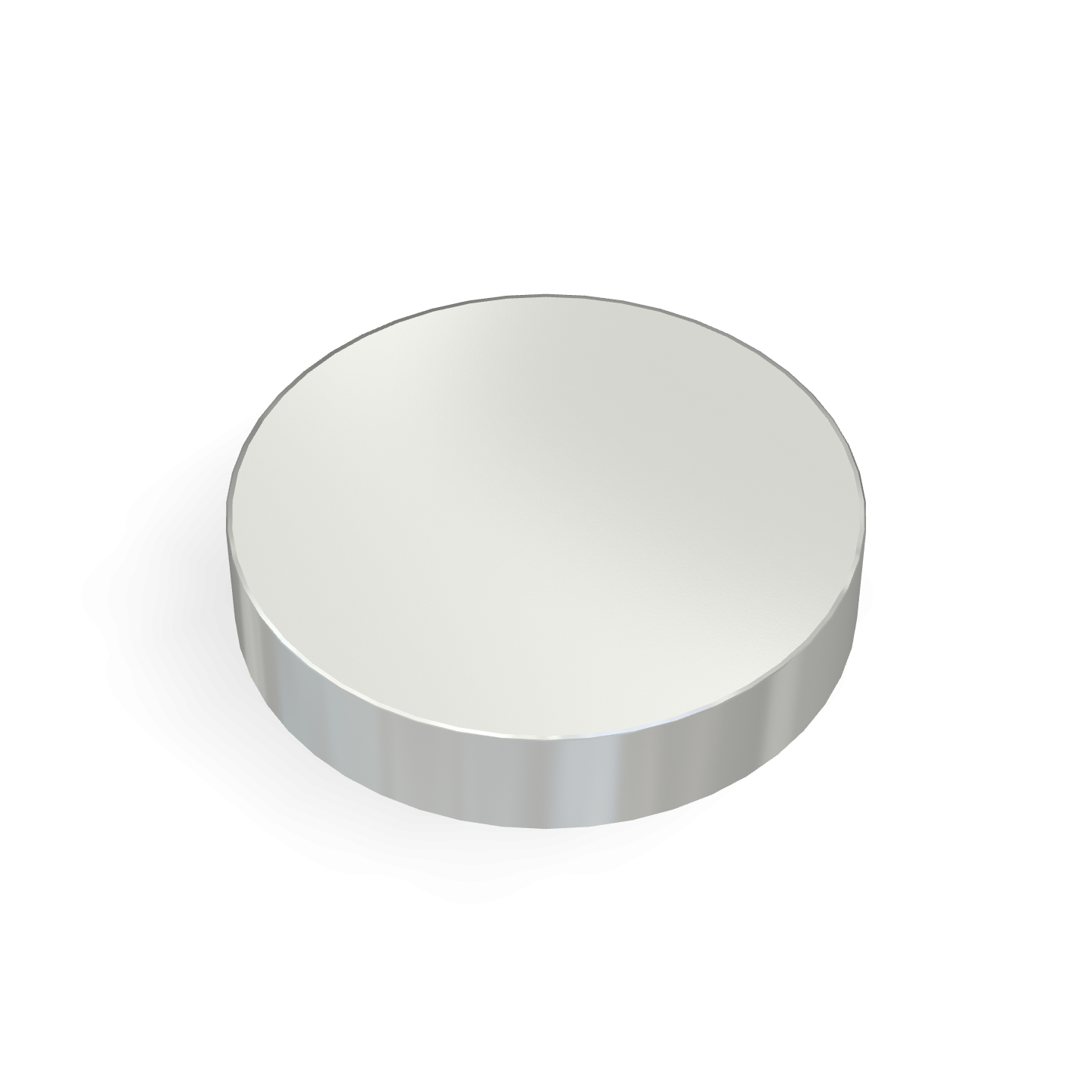
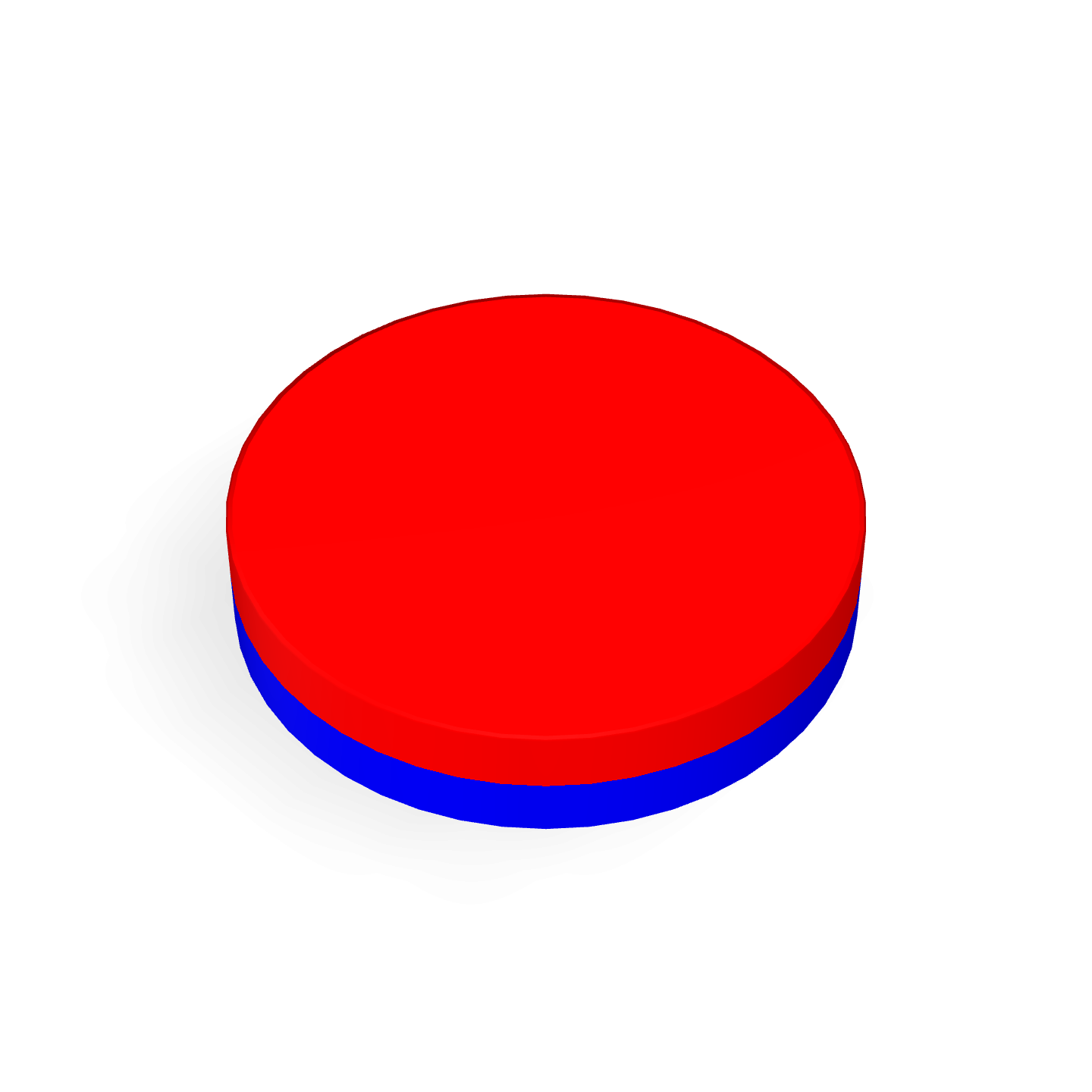
These are the most broadly stocked format for a reason. Disc and cylinder magnets show up across an enormous range of applications, from laboratory instruments and sensor housings to medical devices and speaker assemblies. Magfine carries these from sub-millimetre diameters up to 100 mm, across grades N35 to N52 in both standard and elevated-temperature classes.
Block and Bar Magnets
Rectangular block magnets work well wherever you need consistent holding force over a flat surface. Fixture tooling, magnetic chucks, automotive assembly jigs, and metal fabrication setups all rely heavily on this format. The geometry is also straightforward to integrate into custom housings without additional machining.
Ring and Arc Magnets
Radially magnetized ring magnets are a core component of brushless DC motors, torque sensors, and rotary encoders. In the context of Canadian manufacturing, that means robotics, AGV drivetrains, and EV powertrain assemblies. Arc segments serve the same function in larger-diameter motors and generators. Dimensional and magnetic uniformity matter a great deal in these applications, and Magfine's motor-grade ring stock is held to tight tolerances.
Pot Magnets and Channel Assemblies
Encasing an NdFeB magnet in a steel yoke concentrates nearly all of the flux through one face, producing holding forces far beyond what the bare magnet alone could achieve. That is the purpose of a pot magnet. They are widely used for tool mounting, retrieval, clamping fixtures, and anywhere you want a standardized holding footprint in a production assembly.
Magnetic Filter Bars and Assemblies
Magnetic filtration is a regulatory and quality requirement across a number of Canadian industries. Food processors need to capture ferrous particles before product reaches packaging. Chemical and pharmaceutical plants need to protect downstream equipment. Water treatment facilities use magnetic separation as part of their solids management process. Magfine's filter bars and multi-tube assemblies are housed in stainless steel and are built to integrate inline, with documentation to support CFIA and HACCP audit requirements.
Coating Selection for Canadian Operating Conditions
Bare sintered NdFeB corrodes readily. This is one of the material's known weaknesses, and it matters more in Canada than in many other markets. Humidity swings between coastal BC and the Great Lakes industrial corridor, freeze-thaw cycling in outdoor installations, and aggressive cleaning protocols in food-grade facilities all put pressure on coating integrity. Choosing the right coating at the specification stage saves considerably more trouble than retrofitting a corrosion solution after field failures.
| Coating | Thickness | Salt Spray | Best For |
|---|---|---|---|
| Ni-Cu-Ni (Triple Nickel) | 10–20 µm | 24–48 hrs | General indoor industrial use |
| Zinc (Zn) | 8–15 µm | 24–72 hrs | Outdoor, moderate humidity |
| Epoxy (Powder) | 15–25 µm | 96–200 hrs | Humid environments, food-adjacent |
| Hi-DEN Epoxy (Magfine HDC) | 20–30 µm | 200+ hrs | High-humidity, chemical, outdoor, food processing |
| Gold (Au) | 0.5–1 µm | 48 hrs | Electronics, medical, precision sensors |
| Parylene | 5–50 µm | 500+ hrs | Medical implants, aerospace (specialty) |
Magfine's Hi-DEN HDC epoxy coating was developed in response to specific requests from customers in food production and outdoor energy installation. It consistently clears 200 hours in ASTM B117 salt-spray testing and holds up better against chipping during handling than standard nickel finishes. If your application involves washdowns, outdoor exposure, or any contact with process chemicals, it is worth specifying from the outset rather than upgrading after the fact.
Industries Driving Canadian Magnet Demand in 2026
Electric Vehicles and Hybrid Powertrains
The Stellantis and LG Energy Solution battery facilities in Windsor represent one visible part of a broader EV supply chain buildout happening across Ontario and Quebec. Every permanent magnet synchronous motor in a passenger EV or commercial hybrid uses between one and three kilograms of NdFeB material, and the performance specifications for those motors typically push into the N42H or N45SH range to handle under-hood operating temperatures. This is consistent, high-volume demand and it is not slowing down.
Industrial Robotics and Automation
Rising labour costs and a broader trend toward reshoring production have accelerated robot and AGV deployment at Canadian manufacturing facilities. Each articulated robot arm carries multiple servo motors, precision encoders, and magnetic grippers. Servo feedback systems in particular rely on radially magnetized ring magnets, and the quantity per facility adds up quickly once you count the full installed base.
Renewable Energy
Direct-drive wind turbines avoid the mechanical gearbox entirely, which means the generator relies on a large array of permanent magnets. Canadian wind installations, particularly those in northern or coastal locations with severe weather cycling, typically require N38SH or N35UH grades to maintain coercivity through repeated freeze-thaw temperature swings. Tidal energy projects on both coasts are beginning to drive similar demand as those installations scale.
Oil, Gas, and Mining
Magnetic separation is fundamental equipment in resource extraction and processing. Overband magnets pull tramp iron off conveyor belts before it damages crushers or other downstream machinery. Drum separators recover ferrous fractions in mineral processing. In the oil sands context, magnetic filtration also plays a role in protecting fluid handling equipment from ferrous particulate buildup. High-intensity NdFeB has largely replaced ceramic and alnico alternatives in these roles because the pull force at distance is simply not comparable.
Medical Devices and Life Sciences
Toronto, Waterloo, and Vancouver collectively host a substantial medical technology sector. Applications ranging from surgical robotics to drug delivery actuators and MRI-compatible positioning systems all require tightly toleranced, compliance-documented NdFeB components. The documentation requirement is non-negotiable in this vertical. Buyers in med-tech procurement need a supplier who can produce RoHS and REACH certificates on demand and stand behind traceability through the supply chain.
A Practical 6-Step Sourcing Process for NdFeB Magnets
Most procurement problems with magnets trace back to the same handful of specification gaps. Working through the following steps in order will catch them before they become production issues.
Define what the magnet needs to do
Attraction, repulsion, rotation, filtration, and sensing all lead to different shape and magnetization requirements. Locking this down first prevents a lot of rework later in the process.
Establish the operating temperature
This is the step most commonly skipped. A standard-grade magnet exposed to temperatures above 80°C will demagnetize permanently. Check the worst-case thermal condition for your installation, then select the grade suffix accordingly.
Map the environmental conditions and select a coating
Consider humidity, chemical exposure, handling frequency, and whether any washdown or outdoor exposure is involved. Standard Ni-Cu-Ni works fine in controlled indoor settings. Anything more demanding warrants at minimum a powder epoxy, and often Magfine's Hi-DEN HDC for Canadian field conditions.
Confirm compliance documentation requirements
OEM customers supplying automotive, electronics, or medical end markets will often require RoHS and REACH certification as a condition of supplier qualification. Clarify this with your customer before placing the order. All Magfine products carry full compliance documentation and certificates are available on request.
Decide between stocked formats and custom work
Standard disc, block, ring, and pot magnet formats are available from Canadian stock and can ship within the same week. Custom shapes, non-standard grades, or multi-component assemblies require a quotation and lead time discussion. Getting Magfine's technical team involved early in the design stage typically saves time compared to redesigning around an off-the-shelf part later.
Build buffer stock for critical SKUs
With the October 2025 export controls potentially reinstated after November 2026, a 60 to 90 day safety stock on your highest-volume magnet items is reasonable risk management. The cost of carrying a modest buffer inventory is minor compared to a production line stoppage caused by a delayed shipment caught up in licensing paperwork.
Pricing in 2026: What to Expect and How to Plan
Neodymium oxide is currently priced above US $112,000 per tonne. That level reflects sustained demand from EV production and wind energy deployment, and most market analysts do not see conditions for a meaningful price correction forming before 2027 at the earliest. The global rare earth magnet market is on track to grow from roughly US $22 billion in 2025 to over $30 billion by 2030, and that trajectory keeps upward pressure on raw material costs throughout the forecast period.
For buyers specifying high-temperature grades in the SH or UH range, the pricing situation is more acute. Those grades depend on dysprosium and terbium as coercivity additives, and both elements remain under the April 2025 MOFCOM licensing requirements. Procurement teams with regular volume in those grades should consider annual purchase agreements rather than spot buying.
Sourcing through a domestic Canadian supplier also eliminates several cost components that do not show up in a quoted unit price from an overseas vendor: brokerage fees, customs duties under HS code 8505.11, potential retaliatory tariff exposure, and the cost of carrying extra safety stock to offset unpredictable transit times. Those hidden costs add up quickly on any volume order.
ℹ Volume Pricing
Magfine offers tiered pricing for recurring procurement accounts. If your operation places regular magnet orders, contact us with your typical monthly volumes and part specifications. We will put together a pricing framework that reflects your actual buying pattern rather than one-off transaction rates.
📄 Free Download
2026 NdFeB Magnet Specification and Procurement Checklist
A practical reference document for Canadian procurement and engineering teams. Takes you from application requirements through to supplier evaluation, with a grade selection matrix and coating decision guide built in.
- Grade selection matrix covering N35 through EH series
- Coating decision guide for Canadian climate conditions
- RoHS and REACH compliance checklist
- China export-control risk assessment template
- Supplier evaluation scorecard across six criteria
- Standard dimensional tolerances reference
Frequently Asked Questions
Questions we hear regularly from Canadian engineers and procurement contacts.
Which grade should I specify for an industrial automation application? +
N42 and N45 cover the bulk of industrial automation and robotics requirements. N42 is the better choice when you're buying in volume and cost per unit matters. N52 is worth the premium when space constraints are tight and you need the highest pull force per cubic centimetre. In all cases, confirm the operating temperature before finalizing the grade. Standard grades are rated to 80°C, H-grade to 120°C, and SH to 150°C. A magnet that exceeds its thermal rating demagnetizes permanently.
Do Chinese export controls affect orders placed through a Canadian supplier? +
No. When you order through Magfine, you are buying from Canadian-held stock. The product is already in the country, so MOFCOM licensing requirements and Chinese export clearance timelines are not relevant to your order. The disruption affects buyers who are importing directly from Chinese manufacturers. If that describes your current supply chain, it is worth reviewing whether the risk is worth maintaining, particularly given the uncertainty around what happens to the suspended October controls after November 2026.
What is the practical difference between sintered and bonded NdFeB? +
Sintered NdFeB is pressed, then fired in a furnace to produce a dense, fully anisotropic magnet with energy densities up to 52 MGOe. It is the standard for motors, lifting, robotics, and any application where field strength matters. Bonded magnets mix NdFeB powder with a polymer binder and are moulded or extruded rather than sintered. They can be made into complex shapes and magnetized in multiple directions within one part, but the trade-off is significantly lower energy density. Bonded magnets appear in sensors, encoders, and some consumer electronics. For most industrial applications, sintered is the right choice. Magfine carries both.
What coating should I specify for a food production environment? +
Standard nickel plating is not appropriate for food production environments. For any application involving washdowns, moisture exposure, or proximity to consumable products, specify either powder epoxy or Magfine's Hi-DEN HDC coating. The Hi-DEN HDC exceeds 200 hours in ASTM B117 salt-spray testing and has a harder surface that holds up better under physical handling. Where the magnet will be in a stainless-steel housing, as with filter bars and pot magnets for food-safe filtration assemblies, the housing provides the primary protection and coating requirements for the NdFeB core are less demanding.
Are Magfine products RoHS and REACH compliant? +
Yes. Full RoHS and REACH compliance applies across the Magfine product range. Certificates are available with any order and can also be provided for previously purchased items if you need to complete a supplier qualification package. Contact us with your purchase order reference and we will get the documentation to you.
Is there a minimum order quantity? +
There is no minimum for stocked items. This makes Magfine a practical option for prototype builds, small production runs, and maintenance stock replenishment, not just bulk manufacturing orders. Custom work, including non-standard shapes, specialty grades, and engineered assemblies, is quoted individually and MOQs depend on the specifics of the part. If you have a custom requirement, send us your drawing and expected annual volume and we can give you a realistic number quickly.
Can neodymium magnets be used in food processing equipment? +
Yes, provided the right product is selected. Magfine's filter bars and pot magnets for food processing applications are housed in food-grade stainless steel. The NdFeB core never contacts the product stream directly. These assemblies capture ferrous particles from dry bulk ingredients, liquids, and slurries and are designed to integrate inline without major system modifications. They are suitable for use in facilities operating under CFIA oversight and HACCP food safety management systems.
How are neodymium magnets classified for Canadian customs purposes? +
Finished sintered NdFeB magnets are classified under HS code 8505.11 for Canadian customs purposes. Importers sourcing directly from China are subject to applicable duties under that classification, plus the current MOFCOM export licence requirement on the Chinese side. Buying from Magfine's Canadian stock eliminates both the duty calculation complexity and the export licence dependency, since the goods are already cleared and held in Canada.
About Magfine
Magfine supplies permanent magnets and magnetic assemblies to industrial, commercial, and OEM customers across Canada. The product range covers sintered and bonded NdFeB in standard stocked formats as well as custom-engineered assemblies and magnetic filtration systems for food processing, chemical, and water treatment applications.
Canadian inventory means orders ship without the lead time variability that comes with overseas sourcing, which has become a meaningful advantage given the current export control environment. All products are RoHS and REACH compliant. The Hi-DEN HDC coating option was developed in-house to address the specific corrosion demands of Canadian industrial and outdoor operating conditions.
Procurement teams and engineers with application questions are welcome to reach out directly. The technical team handles specification support as a standard part of the buying process, whether the requirement is a straightforward stock item or something that needs to be engineered from scratch.
Get in touch with the Magfine team
Same-day quotes on stocked items. No minimum order. Technical support included.
Visit Magfine.ca🇨🇦 Canadian Stock · ✓ RoHS and REACH Compliant · 📦 Next-day Shipping · 💼 Volume Pricing Available