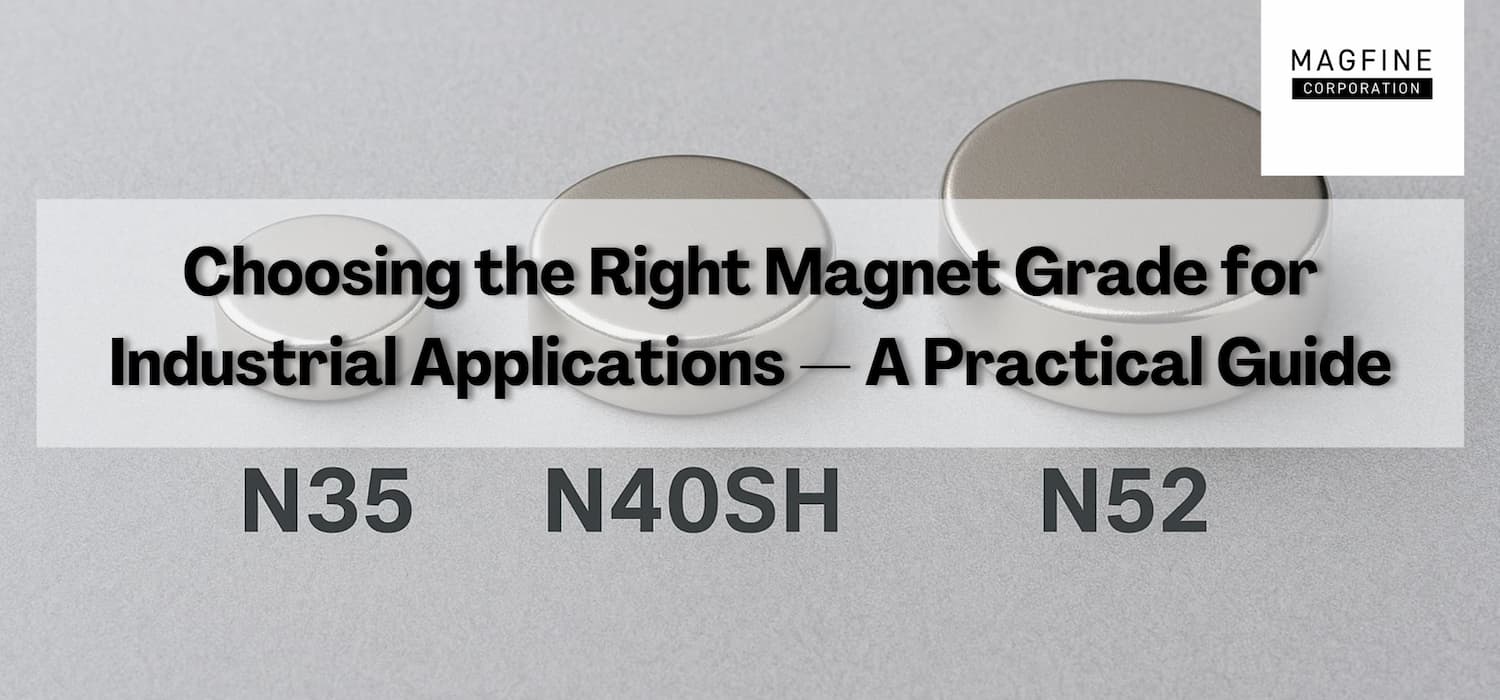
Choosing the Right Magnet Grade for Industrial Applications (N35 vs N40 vs N52) — A Practical Guide
Industrial magnets are essential components in a wide range of applications, from electric motors and sensors to robotics and automation equipment. Choosing the correct magnet grade can significantly impact the performance, durability, and safety of your equipment. In this guide, we break down the most common neodymium (NdFeB) grades — N35, N40, and N52 — and provide practical insights on temperature stability, coatings, pull force, design considerations, and procurement best practices for Canadian manufacturers and engineers.
Understanding Magnet Grades: N35, N40, N52
Neodymium magnet grades indicate their maximum energy product (BHmax), which measures the magnet’s strength. The higher the grade number, the stronger the magnet.
- N35: Entry-level high-performance grade. Suitable for general-purpose applications with moderate strength requirements.
- N40: Medium-strength grade. Offers improved pull force and stability for industrial machinery and motors.
- N52: The highest commercially available grade. Provides maximum magnetic strength, ideal for high-performance applications where space is limited.
Temperature Stability and Coatings
- N35: Max operating temperature ~80°C
- N40: Max operating temperature ~80–100°C
- N52: Max operating temperature ~80°C (higher-temp variants available)
Coatings improve durability and corrosion resistance. Common options include Nickel-Copper-Nickel, Epoxy, and Zinc/Gold plating depending on the environment.
Pull Force
Pull force refers to the force a magnet can exert on a ferromagnetic surface. Higher-grade magnets like N52 can provide up to 50% more pull force than N35 magnets of the same size. Factors affecting pull force include magnet grade, surface area, shape, distance, and temperature.
Design Examples for Industrial Applications
Small Electric Motor
Recommended Grade: N40
Balance of strength and cost; tolerates moderate heat.
Robotic Gripper
Recommended Grade: N52
High pull force in a compact space, ideal for precise gripping.
Sensor or Switch
Recommended Grade: N35
Cost-effective with lower strength requirements; suitable for signal detection.
Industrial Holding / Fixing
Recommended Grade: N40 or N52
Choice depends on object weight and environmental conditions.
Procurement Checklist
- Grade and pull force: Match magnet grade to required performance
- Temperature rating: Ensure operating temperature stays below the maximum
- Coating type: Match the coating to environmental conditions
- Supplier reliability: Check certifications, lead times, and technical support
- Custom specifications: Request technical drawings and feasibility checks if needed
- Regulatory compliance: Ensure magnets meet local safety and shipping regulations
Conclusion
Selecting the right magnet grade requires balancing strength, thermal stability, environmental durability, and cost. Understanding the differences between N35, N40, and N52 grades allows engineers and procurement teams to design efficient, reliable industrial systems. Canadian manufacturers benefit from sourcing locally or through trusted suppliers to ensure timely delivery, consistent quality, and technical support.
Request a technical datasheet and pull-force calculation